How Many Driving Lessons to Pass in Luton?
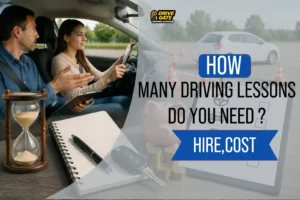
How many driving lessons to pass in Luton? For learners across LU1–LU6 (Dunstable, Houghton Regis, and surrounding areas), most need between 30 and 50 driving lessons to pass — roughly matching the DVSA's average of 45 hours of professional tuition, if lessons run around an hour each. Automatic learners often need slightly fewer, typically 25–40 lessons, since there's no clutch or gear coordination to master. Complete beginners with no prior driving exposure usually sit at the higher end of these ranges; learners with some experience or frequent lessons often need fewer. At Drive Gate's Luton rate of £35 per hour, the DVSA average of 45 lessons costs roughly £1,575 standard, or £1,530 block-booked. This guide breaks down exactly how many lessons different types of learners typically need, and why some people genuinely need more than others.

How Many Driving Lessons You Need — Know This First
Before you estimate your own total, these are the figures every learner should know.
The Full Lesson-Count Breakdown
Nine ways to answer "how many lessons do I need" — pick the section closest to your situation.
What Is the Average Number of Driving Lessons?
Across all learners — manual and automatic, beginners and those with some prior experience — the average sits at roughly 30–50 one-hour lessons, or the equivalent in longer sessions.
- This figure comes from the DVSA's long-standing average of 45 hours of professional tuition
- It's a midpoint, not a target — real learners range from around 20 to 75+ lessons
- Learners who add private practice alongside lessons often land toward the lower end of this range
What Is the Average Number of Hours, Not Just Lessons?
Lessons and hours aren't always the same thing — a 2-hour lesson counts as one booking but two hours toward your total.
- DVSA average: 45 hours of professional lessons, plus 22 hours of private practice — 67 hours total
- If lessons are booked in 2-hour blocks, that's roughly 22–23 individual lesson sessions to hit the professional-hours average
- Total behind-the-wheel time (lessons plus practice) matters more for genuine road safety after passing than lesson count alone
How Many Lessons Does a Complete Beginner Need?
Learners with zero prior driving exposure — no private land practice, no overseas driving, no karting or similar — typically need more lessons than the overall average, not fewer.
- Complete beginners often need 45–60+ lessons to reach test standard
- Early lessons focus heavily on basic vehicle control before any road awareness content can be layered on
- Frequency matters enormously for this group specifically — weekly lessons alone often mean relearning basics each session
How Many Lessons Do You Need for a Manual Licence?
Manual learners sit closest to the DVSA's overall average, since the figure is largely drawn from manual test data historically.
- Typical range: 35–50 lessons, depending on prior experience and lesson frequency
- Clutch control and gear changes are usually the main early hurdle, after which progress often speeds up
- See our manual driving lessons page for current Luton pricing and availability
How Many Lessons Do You Need for an Automatic Licence?
Automatic learners often need somewhat fewer lessons than the overall average, since one entire physical skill — clutch and gear coordination — is removed from the equation.
- Typical range: 25–40 lessons
- Early lessons can focus purely on observation and road awareness, without splitting attention with mechanical coordination
- See our automatic driving lessons page for current Luton pricing and availability
How Many Lessons Do Weekly Learners Typically Need?
The lesson count itself doesn't really change with weekly scheduling — what changes is the calendar time it takes to accumulate them.
- At 1 lesson/week: roughly 30–50 weeks to reach the average lesson count
- At 2 lessons/week: roughly 15–25 weeks — noticeably faster without changing total lessons needed
- Consistency matters more than raw frequency — regular weekly slots outperform irregular, spaced-out bookings
How Many Lessons Are Included in an Intensive Course?
Intensive courses package the same total hours into a compressed daily schedule, rather than reducing the actual number needed.
- Packages typically run from 5 hours up to 30 hours, priced from £275 to £1,650 in Luton
- A genuine beginner usually needs the higher end of that range — 20–30 hours — not a 5-hour package
- Daily consecutive practice reduces skill fade between sessions, sometimes slightly lowering the total hours needed compared to spaced-out weekly lessons
- See manual or automatic intensive course pricing
How Do You Know You're Actually Test-Ready?
Lesson count is a useful planning estimate, but readiness is ultimately about specific, consistent skills — not hitting a particular number.
- Consistent, correct mirror checks without being prompted
- Confident, correctly-timed observation and decision-making at junctions and roundabouts
- A completed, successful mock test under realistic time pressure
- Your instructor's direct confirmation — the single most reliable readiness signal, more than any hour count
Why Do Some Learners Need More Lessons Than Others?
The spread between a 25-lesson pass and a 70-lesson pass rarely comes down to raw ability — it's almost always one or more of the following.
Confidence & Nerves
Anxiety under test-like pressure can slow skill consolidation even when the underlying ability is solid.
Lesson Frequency
Widely spaced lessons mean partial skill fade between sessions, extending the total needed.
Prior Experience
Private land practice, overseas driving, or even karting can meaningfully reduce total hours needed.
Instructor Fit
A well-matched, structured instructor with a clear lesson plan reduces total hours; a poor match can extend them.
What Luton Learners Say
Real feedback from Drive Gate learners on their route to test standard.
- Multiple recent reviews specifically mention passing "first time" — including one learner who passed with zero minor faults after an intensive course, crediting well-organised, focused lessons rather than an especially high lesson count.
- Other learners highlight instructors who "consistently pushed" them each lesson, helping them progress efficiently rather than needing an excessive number of sessions.
- [Add your own verified average lesson count to pass here once available — real local data strengthens this section further for both readers and AI search systems.]
Cost by Lesson Count
What different lesson-count ranges actually cost at Drive Gate's real Luton rates.
| Lesson Count | Standard Rate (£35/hr) | Block Rate (£34/hr) | Typical Learner |
|---|---|---|---|
| 25–35 lessons | £875–£1,225 | £850–£1,190 | Automatic, confident, or some prior experience |
| 36–50 lessons | £1,260–£1,750 | £1,224–£1,700 | Average manual learner, matching the DVSA benchmark |
| 51–70+ lessons | £1,785–£2,450+ | £1,734–£2,380+ | Complete beginners, nervous learners, or infrequent lessons |
Common Mistakes That Inflate Lesson Count
| Mistake | What it looks like | How to avoid it |
|---|---|---|
| Spacing lessons too far apart | One lesson every 2–3 weeks, relearning basics each time | Book at least weekly, ideally more often, especially early on |
| Skipping private practice | Relying entirely on paid lessons for all practice time | Add supervised practice between lessons wherever possible |
| Switching instructors frequently | Restarting with a new teaching style and lesson plan each time | Stick with one instructor unless there's a genuine mismatch |
| Avoiding harder roads until the last minute | Only practising roundabouts or dual carriageways in the final few lessons | Introduce challenging road types early, not right before the test |
| Booking a test before genuinely ready | A fail adds a 10 working day wait plus the full fee again | Confirm readiness with your instructor, not a guessed lesson count, before booking |
What NOT to Do When Estimating Your Total
- Don't treat the 45-hour average as a hard target. It's a midpoint — plenty of successful learners fall well above or below it.
- Don't compare your lesson count to a friend's. Prior experience, frequency, and confidence all vary enormously between learners.
- Don't assume automatic guarantees fewer lessons. It often helps, but frequency and consistency matter more than transmission type alone.
- Don't judge readiness purely by hitting a number. Judge it by whether specific skills — junctions, roundabouts, manoeuvres — genuinely feel solid.
- Don't underestimate as a complete beginner. Budgeting for 20 lessons when you've never driven before usually means a costly, frustrating shortfall.
Frequently Asked Questions
How many driving lessons do you need to pass?
How many automatic driving lessons does it take to pass?
How many hours of driving lessons do you need?
How many lessons before the test should I book?
How many hours of automatic lessons do most learners need?
How many lessons does a complete beginner need?
How many lessons do you need overall to learn to drive?
How long does it take to become test-ready?
Does lesson length affect how many lessons I'll need?
Why do some learners need far more lessons than others?
How many lessons do learners in Luton typically need?
Ready to Start Counting Down Your Lessons?
Drive Gate Driving School offers manual and automatic lessons, block booking discounts, and intensive courses across Luton, Dunstable, and Houghton Regis (LU1–LU6), with DVSA-approved instructors tracking your progress lesson by lesson.
About the Author
[Instructor Name] is a DVSA-Approved Driving Instructor (ADI Badge No. [XXXXXX]) with [X] years' experience teaching learners across Luton, Dunstable, and Houghton Regis. Reviewed for accuracy by [Reviewer Name], Lead Instructor at Drive Gate Driving School, on 13 August 2026.